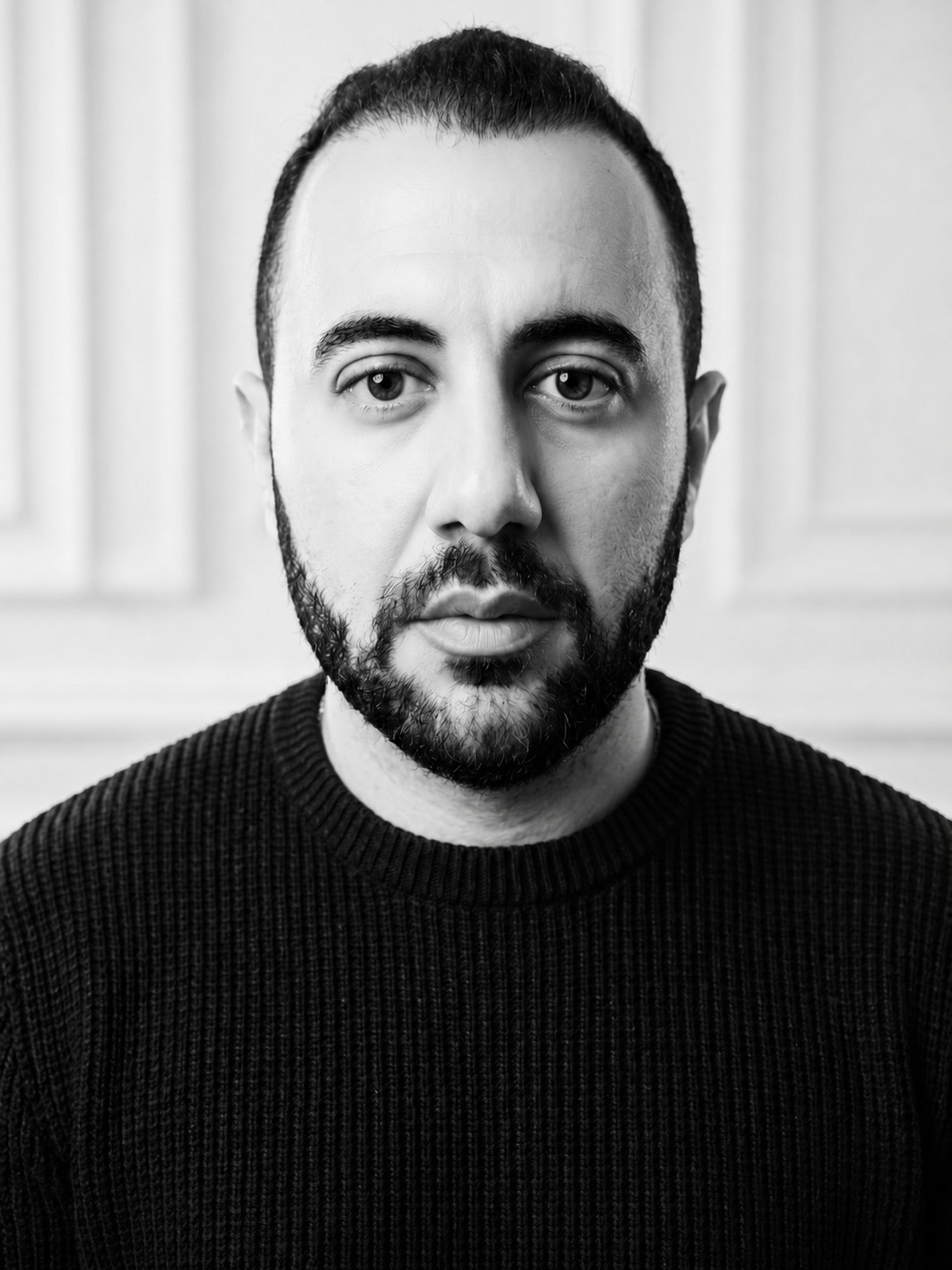
Mohamed
Hussein
Ten years running paid media and performance budgets across hospitality, real estate, and e‑commerce — Cairo, Dubai, Berlin. I place the bid, read the data before it finishes loading, and cut whatever isn't converting. Google, Meta, TikTok, Snapchat, programmatic — same discipline every time: spend where it earns, kill where it doesn't.
Every number here shipped in a live campaign.
Pulled straight from the record — client, sector, and the result, no rounding up.
Same story, by account.
Each account's single biggest number, side by side. Different metrics, same discipline.
Brands I've put budget behind.
Real accounts across Berlin, Dubai and Egypt — marks pulled from each company's public site; swap in higher-res versions any time.
Six roles. Same job every time: make the budget work harder.
In reverse chronological order — current role marked live. 2013–2026 continuous track record.
- Increased qualified traffic by 28% in 3 months through targeted Google & Meta Ads campaigns.
- Improved organic traffic by 22% with SEO strategies for key categories.
- Boosted CTR by 18% and conversions by 15% via seasonal promotions.
- Optimized budgets daily using GA4 and Tag Manager; delivered performance reports with growth recommendations.
- Increased overall sales by 30% through conversion-focused campaign restructuring.
- Directed and mentored a team of 5, exceeding client KPIs.
- Achieved 40% ROI growth with optimized Google & Meta Ads campaigns.
- Improved conversion rates by 25% through advanced audience segmentation.
- Increased measurement accuracy by 30% with GA4 + Tag Manager.
- Reduced CPA by 20% via A/B testing and eliminating low-value placements.
- Managed €200K budget, reducing costs by 25% while maintaining lead flow.
- Improved engagement by 35% through social listening and email workflows.
- Introduced agile workflow, cutting launch times by 15%.
- Achieved a 10% lift in conversions through unified messaging.
- Increased lead generation by 50% quarter-over-quarter through PPC optimization.
- Grew organic traffic by 60% in 6 months via SEO revamp.
- Improved form completion rates by 18% with landing page tests.
- Trained junior associates in analytics and campaign setup.
- Increased e-commerce conversions by 20% via SEO and PPC strategies.
- Boosted brand awareness by 45% with social media campaigns.
- Achieved a 15% uplift in order value by shifting spend to high-ROI channels.
- Improved retention by 15% through personalized email campaigns.
- Expanded brand reach by 25% with SEO and microsite content.
- Increased CTR by 10% by optimizing ad spend across search & display.
What's on the desk.
Platforms, analytics, and the SEO and design work that supports the media spend.
Media Buying & Advertising
Analytics & Optimization
SEO & Web
Design, Leadership & Strategy
AI & Automation
Certifications on record.
Google Search Certification
Google Display Certification
Meta Ads Manager — Audience Creation (Meta Blueprint)
Sadat Academy for Management and Science, Egypt — 2012
Eligible to work in Germany without restrictions
Got a budget that should be working harder?
Send the brief, the market, and the number you're chasing. I'll tell you honestly whether it's a paid-media problem or something else first.